Eutrobac Acquired by Agriment Services Inc.
Eutrobac, a New York-based agricultural technology startup acquired by Agriment Services, Inc. (ASI) in April, started as a research idea inspired by environmental issues on a family farm.
Found Industries, an I-Corps alum and participant in the first ARPA-E conference course in May 2022, has recently received a major Department of Energy critical minerals award.
Cornell-based startup REEgen, co-founded by I-Corps alumni Alexa Schmitz, Ph.D. ’18 and Sean Medin, Ph.D. ’24, has been awarded a $200,000 Innovation Matching Grant (IMG) from Empire State Development’s Division of Science, Technology and Innovation (NYSTAR).
Startup ventures emerging from I-Corps teams welcomed a total of 119 new paid employees during the year. Alumni secured $16,617,873 in SBIR and STTR awards and raised $29,713,562 in capital to support research, commercialization progress, and long-term scaling.
I-Corps alum and University at Buffalo researcher Anna Blumental-Perry is advancing a novel therapeutic designed to rebuild damaged lung cells, a breakthrough that could significantly improve treatment for chronic respiratory diseases, after being awarded $50,000 in seed funding from the SUNY Technology Accelerator Fund. In June 2025, Blumental-Perry completed the BIO I-Corps conference course hosted…
Ascribe Bioscience, an Ithaca, NY–based agricultural technology company, has closed a $12 million Series A financing round to support the commercial launch of its flagship biofungicide, Phytalix®.
The Regenerative Agricultural Innovations, LLC (RAI), led by Dr. Matt Wilson, professor of animal sciences at West Virginia University (WVU), is helping make small farms in West Virginia more sustainable and profitable.
Brite has developed a student support platform that uses behavioral data and predictive analytics to proactively identify at-risk college students and facilitate timely interventions. The company has raised over $650K in funding and has established partnerships with seven universities across the country.
I-Corps alumni company OWiC Technologies has been awarded a $2.35 million Fast-Track SBIR grant from the National Institutes of Health’s National Institute of General Medical Sciences (NIGMS).
I-Corps alum Assurtek Surgical is commercializing the world’s first AI-powered dental drill technology.
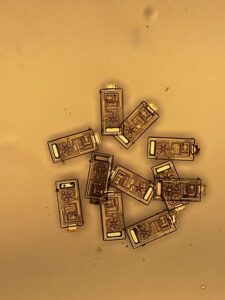
Nanopath is developing molecular diagnostic platforms to detect viral, bacterial, and fungal pathogens using a single patient sample.
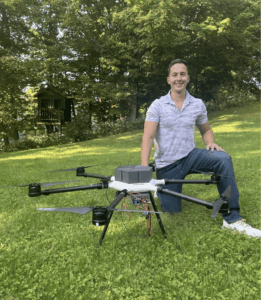
Angelo Niforatos, a recent Syracuse University graduate with master’s degrees in engineering and business, used his NSF I-Corps experience to accelerate his startup, Niffy Drone Solutions.
I-Corps alum Burlington Bio, a biotech startup spun out of the University of Vermont, was recently awarded a $305,000 Phase I SBIR grant from the NSF.
I-Corps alum Biobe, a startup founded at the University of Vermont, is leading the conversation around emotional wellness for children and families.
Dr. Yuguang Chris Li, Assistant Professor of Chemistry at University at Buffalo, founded PlasmaChem Solutions to commercialize a novel plasma-based method to more efficiently convert atmospheric nitrogen and water into ammonia.
Dr. Andrew Talal, a University at Buffalo Professor of Medicine and leading liver disease expert, first participated in I-Corps in 2020 to evaluate the market fit of a facilitated telemedicine approach for hepatitis C (HCV) treatment in opioid treatment programs.
Bluminate (formerly VAPGuard) is transforming infection prevention in critical care with a novel, patent-pending medical device that reduces the risk of the most costly and deadly hospital-acquired infections, such as ventilator-associated pneumonia and catheter-associated urinary tract infections.
Cellec Technologies incorporated in 2016 after completing the NSF I-Corps national program and successfully identifying a product-market fit through customer discovery.
Pittsburgh-based Surface Design Solutions has raised $925,000 and hired four employees to help manufacturers achieve dramatic cost reductions by optimizing surfaces.
Aneurisk, a Pittsburgh-based medical software startup, has hired eight employees and raised over $1 million to develop AI-enabled tools to improve the diagnosis and management of abdominal aortic aneurysms (AAA).
Binghamton University’s team of Assistant Professor Jayson Boubin and Ph.D. student Melika Dastranj developed REMIX, a drone-mounted hyperspectral camera system capable of processing massive amounts of data in real time to detect early signs of crop disease.
Sodium-ion battery solution company Standard Potential conducted in-person customer discovery interviews at The Battery Show through a 2023 I-Corps course.
In August 2025, a group of researchers developing small spacecraft innovations explored the potential real-world impact of their technology in a specialized NSF I-Corps regional course led by the Interior Northeast I-Corps Hub (IN I-Corps) in collaboration with NASA.
A $1.25 million grant will help I-Corps alumni startup Photonect Interconnect Solutions advance the commercialization of its photonics innovation. Photonics technology can make data centers and telecommunications networks, which require a lot of power to handle internet traffic and cloud storage, more cost- and energy-efficient.
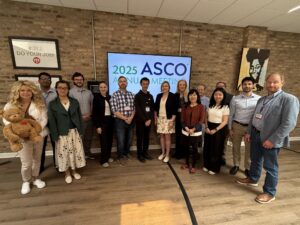
This June, an I-Corps cohort of oncology researchers – each working on a cutting-edge solution to improve care and outcomes for cancer patients – took to Chicago for the American Society for Clinical Oncology (ASCO) Annual Meeting to interview clinicians about their biggest problems.
This February, Cornell health technology startup SensVita, which has developed a touch-free way of monitoring of heart and lung functions, was awarded a $305,000 STTR Phase I grant from the National Science Foundation.
I-Corps alumni startup AreaHub has taken a major step in their mission to inform businesses and individuals with environmental risk intelligence.
In September, the National Institutes of Health’s National Institute of Neurological Disorders and Stroke (NINDS) awarded Neuralenz a $500k Phase I STTR grant for developing a new, non-invasive measurement of cerebral blood flow that could enable doctors to rapidly detect neurological damage and treat it more accurately.
EchoICs, an I-Corps regional course alum and 2022 National I-Corps Team participant, received a $275,000 STTR Phase I Award from the National Science Foundation in August. Founded by Dr. Alyssa Apsel, Director of Computer Engineering at Cornell University, and postdoctoral student Thomas Tapen, EchoICs developed a new flexible spectrum radio for more efficient military communications and commercial cellular usage.
NASA recently collaborated with the Interior Northeast I-Corps Hub (IN I-Corps) to run a specialized NSF I-Corps regional course for wildfire technology management innovators, an initiative that complements the agency’s wildfire management efforts.